Epoxy Lining for Semi-Buried Fuel Tank
Introduction
A partially buried fuel tank required remedial maintenance coating to restore containment integrity. The primary concern was ensuring the structure remained fully sealed against fuel leakage and preventing hydrocarbon contamination of the surrounding ground and groundwater.
Our Solution
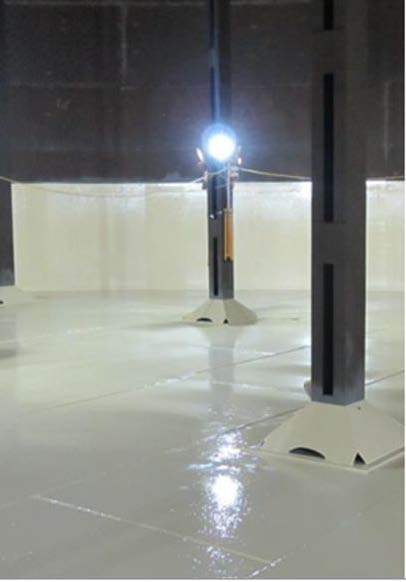
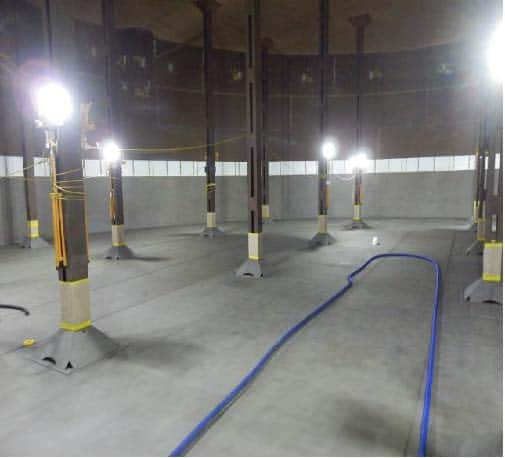
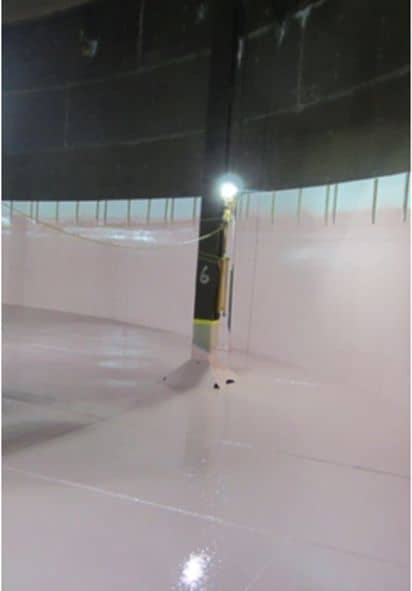
Surface preparation began with mechanical cleaning to remove all existing contaminants, followed by abrasive blast cleaning to SA2.5 standard across all floor and wall surfaces. A Bresle test was conducted post-blast to confirm soluble salt levels were within acceptable limits for coating adhesion. Once surface conditions were verified, a stripe coat was applied to all edges and welds, followed by the first coat of Jotun Tankguard SF — a solvent-free epoxy specifically formulated for fuel and chemical containment. An independent ICPS inspection verified application quality before the final top coat was applied, ensuring full coverage and film thickness compliance.
Key Benefits
- Abrasive blast cleaning to SA2.5 ensured optimal surface profile for coating adhesion
- Bresle salt testing confirmed surface cleanliness prior to coating, reducing risk of premature failure
- Jotun Tankguard SF provides chemical resistance suitable for hydrocarbon fuel containment
- Stripe coating applied to vulnerable edges and welds to prevent film thinning at high-risk areas
- Independent ICPS inspection at intermediate stage ensured quality assurance before final coat application
- Restored tank containment integrity, eliminating risk of fuel leakage and ground contamination
Conclusion
The tank was returned to service with a fully compliant protective lining system, safeguarding against fuel loss and environmental contamination. UCL Ltd delivers verified coating solutions for fuel storage and containment structures to recognised industry standards.