Protective Epoxy Coating for Pipework in Fuel Facility
Introduction
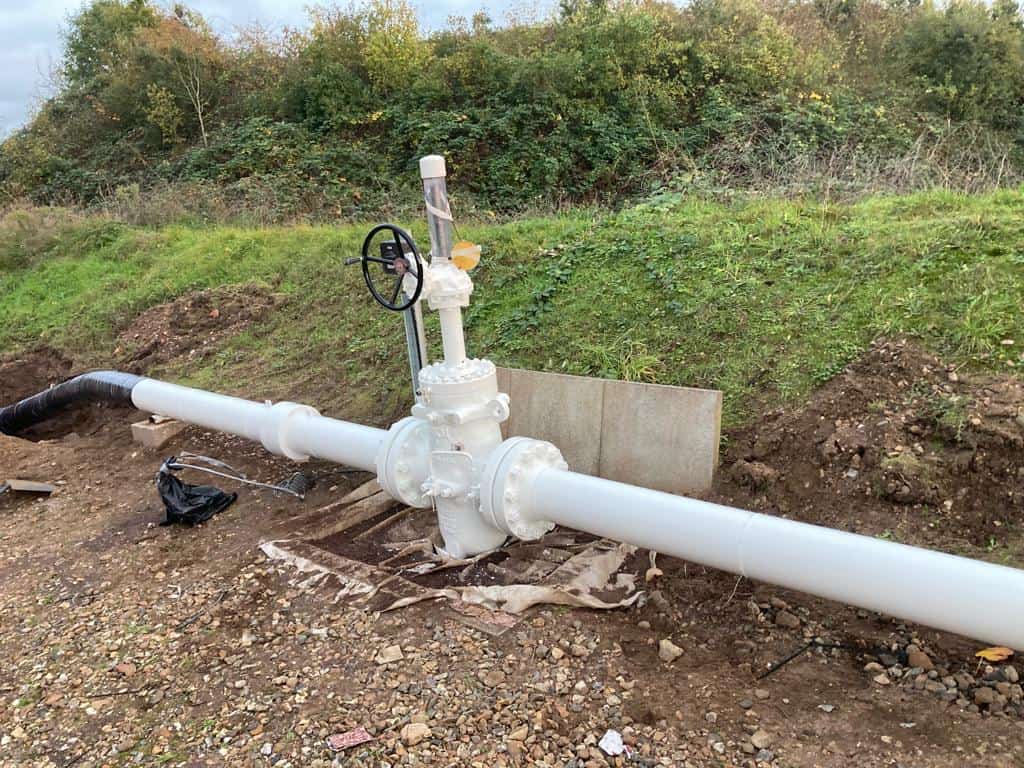
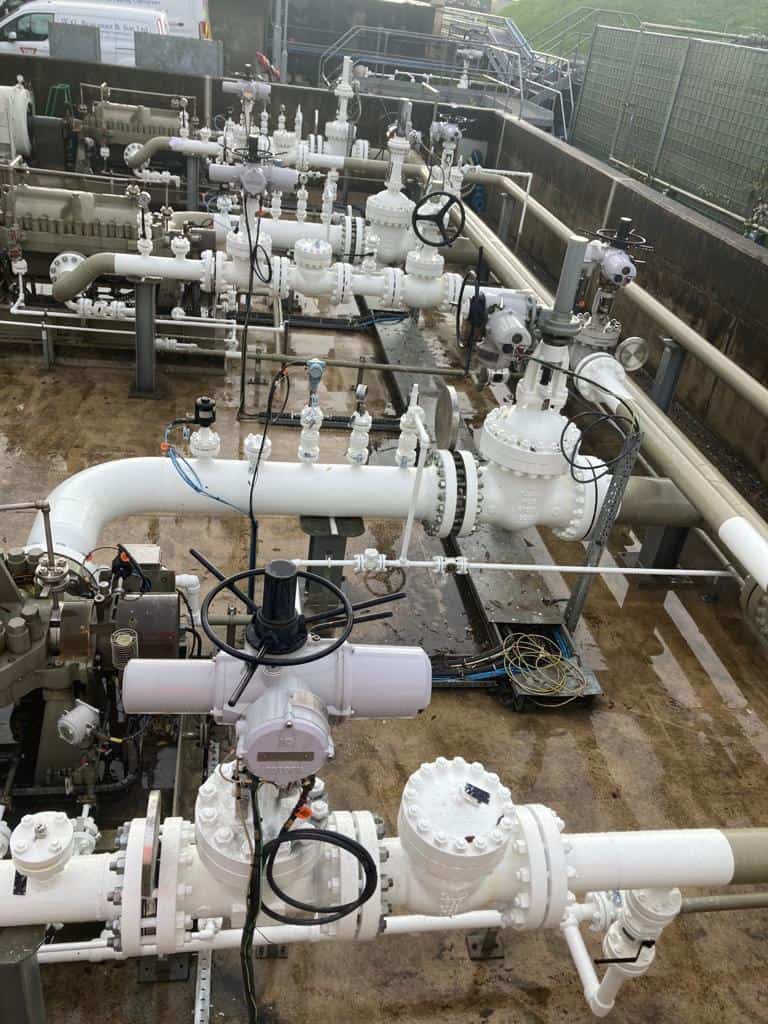
A major UK fuel supplier identified corrosion on pipework within an operational fuel facility, requiring targeted recoating as part of scheduled maintenance. Untreated corrosion posed a risk to network integrity, necessitating safe excavation, surface preparation and application of a compliant protective coating system.
Our Solution
Prior to excavation, CAT and GENNIE radio-detection equipment were used to survey the area and confirm safe dig conditions. Defective pipe wrapping was exposed, removed and replaced with Denso tape. Exposed pipe surfaces were abrasive blasted using garnet abrasive to achieve an Sa 2.5 surface profile in accordance with ISO 8501-1.
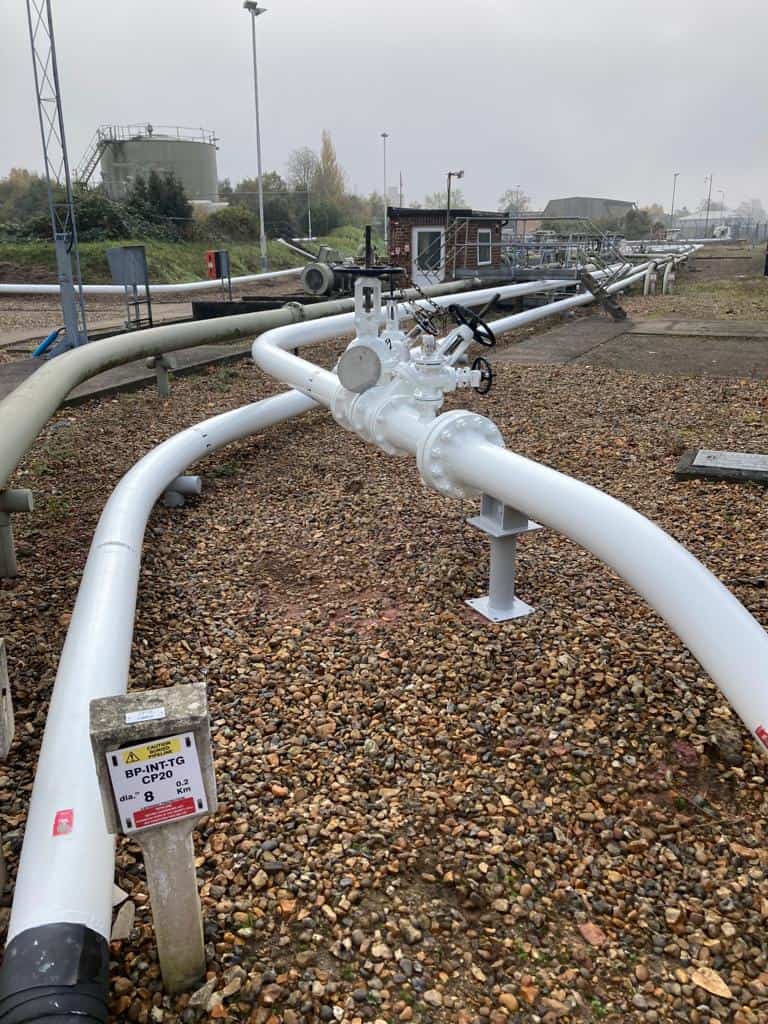
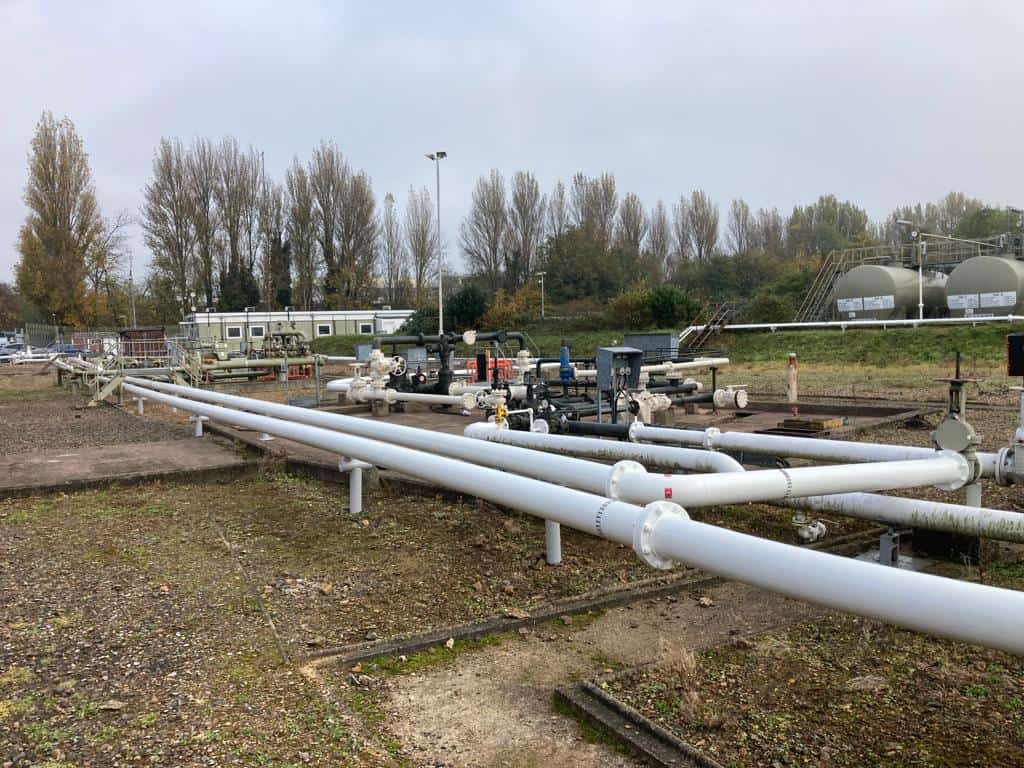
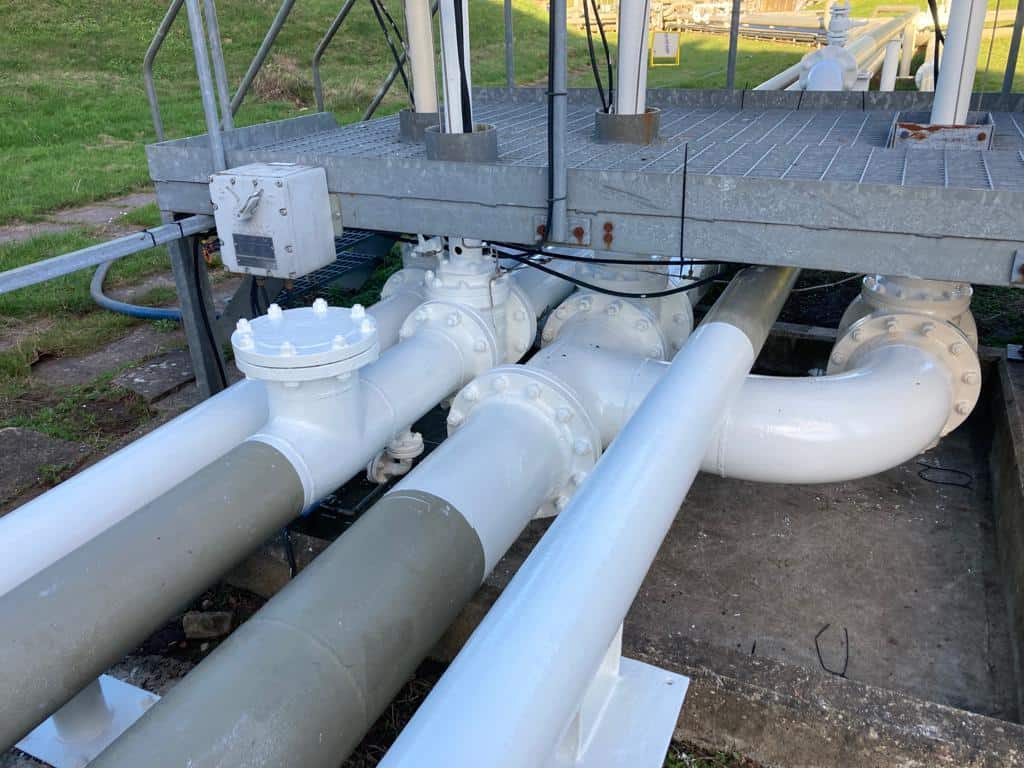
Adverse weather conditions — including wind and rain — required the UCL team to construct a full encapsulation tent around the work area, enabling coating operations to continue without interruption. The protective coating system was then applied across 19 pipe supports, alongside localised corroded areas on associated pipework and valves. Hand preparation was carried out where mechanical blasting was not practicable.
Key Benefits
- Sa 2.5 surface profile achieved across all treated surfaces, meeting coating manufacturer requirements
- Encapsulation tent erected on-site to overcome adverse weather and maintain programme continuity
- 19 pipe supports coated alongside localised pipework and valve repairs in a single mobilisation
- Defective wrapping replaced with Denso tape, restoring below-ground corrosion protection
- Radio-detection survey completed prior to excavation, ensuring safe working in an operational fuel facility
- Client satisfaction led to award of further coating scopes across additional sites and assets
Conclusion
UCL successfully delivered a compliant protective coating and wrapping replacement programme at an operational fuel facility, working safely around live infrastructure. This project demonstrates UCL's capability to adapt methods on-site and provide ongoing asset protection across fuel storage and distribution networks.