Iron Ore Hopper, Sweden
Introduction
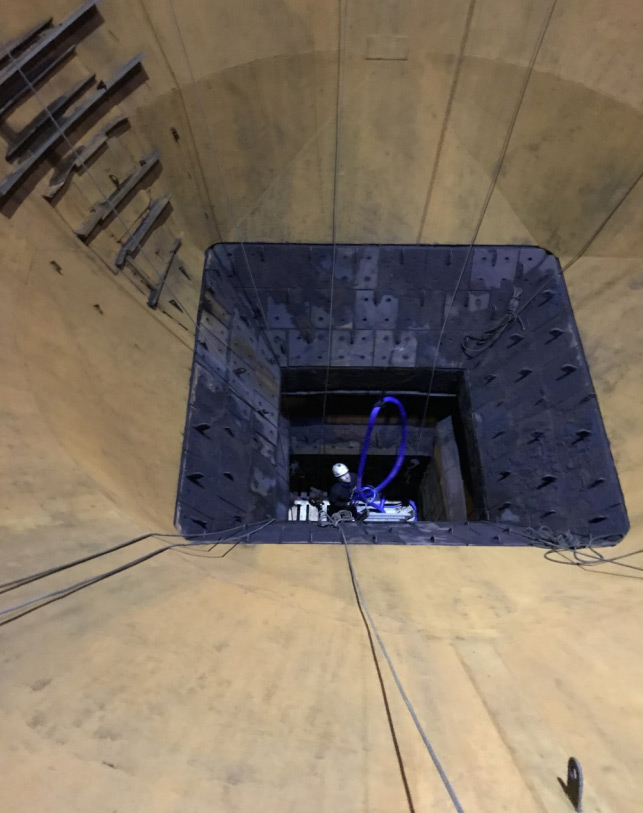
A large iron ore storage hopper in Sweden required anti-corrosion protection in a severely aggressive service environment. Natural salts extracted alongside the ore acted as an electrolyte accelerating steel corrosion, compounded by seasonal temperature swings from -18°C to +25°C and cyclic condensation. The steel exhibited heavy surface pitting and had never previously been coated.
Our Solution
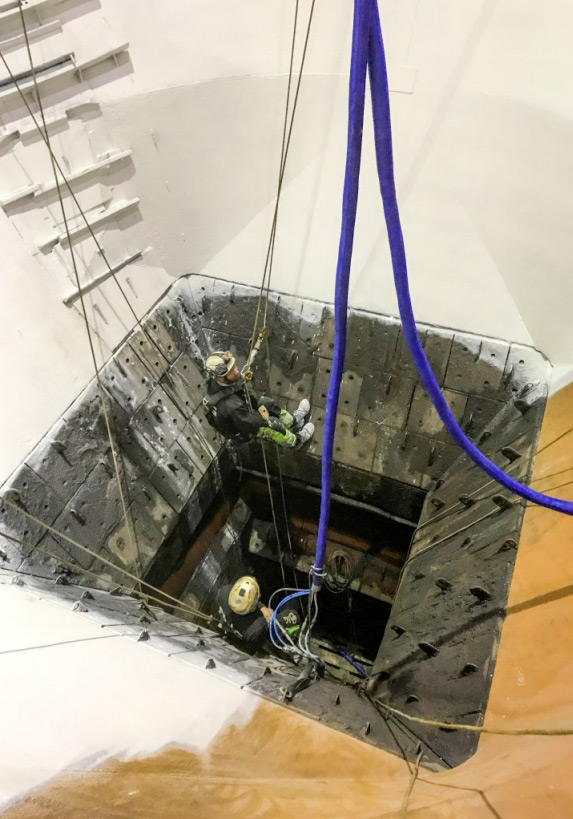
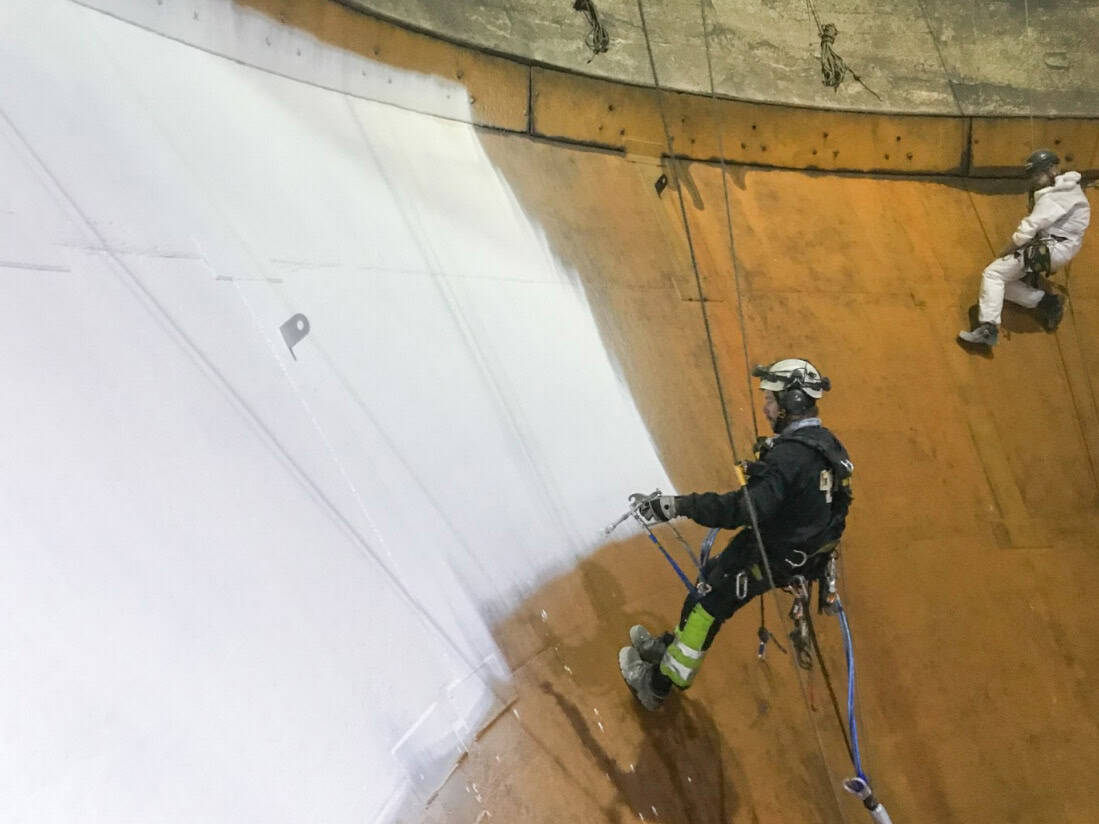
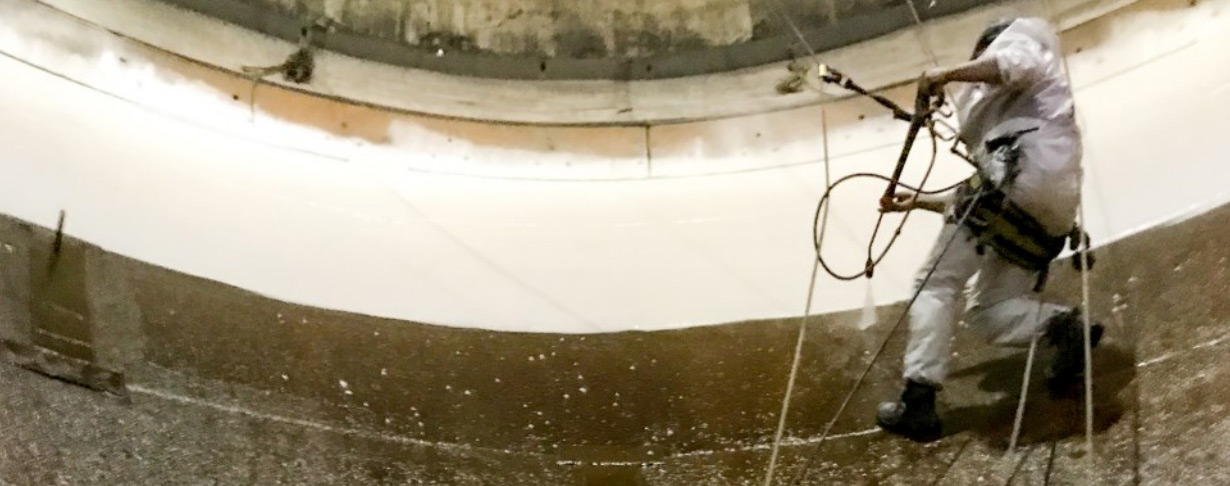
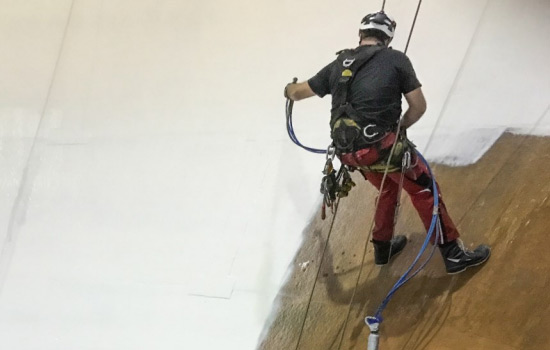
Surface preparation was carried out by rope access technicians working at height, initially removing thick iron ore deposits using mechanical hand tools before abrasive blasting to SA2/SA2.5. Post-blast washing with potable water confirmed significant chloride contamination, evidenced by flash rusting within minutes. Surface pitting exceeded 5 mm in depth in areas, ruling out conventional coating systems. EonCoat CR was selected for its ability to react chemically with the steel substrate. Applied at 800 µm WFT in a single coat over an eight-hour shift, the product chemically passivates steel via magnesium iron phosphate formation, eliminating pinholes, voids, and delamination. A 3,500 psi pressure-wash verification test confirmed adhesion across virtually the entire surface, with less than three square feet requiring localised reapplication.
Key Benefits
- Single-coat application at 800 µm WFT reduced programme duration and materials handling at height
- Chemical passivation via magnesium iron phosphate negates the risk of pinholes, voids, or delamination
- No stripe coating required, despite surface pitting in excess of 5 mm depth
- Post-application wash test provided immediate, objective quality verification before equipment return to service
- Suitable for surfaces with active chloride contamination and flash rusting conditions
- Operational in service temperatures from -18°C to +25°C without coating integrity risk
Conclusion
EonCoat CR delivered a verified, single-coat anti-corrosion solution in one of the most demanding storage environments encountered on a UCL project. This case demonstrates UCL's capability to execute complex rope access coating projects under extreme service conditions.